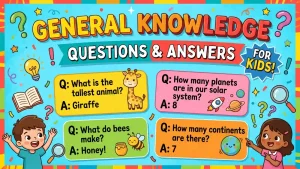
Question examples are sample questions that show how to ask for information. They cover everyday topics such as school, work, travel and chat. This guide explains what question examples are, shows 50 examples, and shares tips for asking better questions.
Definition and Meaning of a Question Example
A question example is a sample question that shows how to ask for information. It helps people understand how to form a question and when to use it.
A question usually asks for an answer. It may ask about a person, place, thing, event, or idea. Most written questions end with a question mark (?).
For example:
- What is your name?
- Where do you live?
- Why is the sky blue?
- How do you make a sandwich?
- When does the class start?
Each sentence asks for specific information. These are simple question examples that people use in everyday life.
What Is the Purpose of a Question Example?
Question examples help people learn how to ask questions. They are useful for students, teachers, writers, and anyone who wants to improve communication.
Here are some common purposes.
1. To learn new information
Questions help us discover facts and ideas.
Example:
Ali: What is the capital of France?
Sara: Paris.
2. To start a conversation
Questions help people talk and get to know each other.
Example:
Sam: What do you like to do for fun?
Alex: I like playing football.
3. To solve problems
Questions help us find answers when something goes wrong.
Example:
Mia: Why is my computer not working?
Leo: Maybe the battery is dead.
4. To test knowledge
Teachers and quiz makers use questions to check what people know.
Example:
Teacher: Which planet is known as the Red Planet?
Student: Mars.
What Makes a Good Question?
A good question is easy to understand. It asks for the information you need without confusing the reader.
For example, “Where is the nearest library?” is clear and direct.
In contrast, “Can you tell me about that place near the other place?” may be unclear if the listener does not know which places you mean.
The best question examples are clear, simple, and suited to the situation.
Background and History of Questions
Questions have been part of human communication for thousands of years. People have always needed to ask for food, find places, share ideas, and learn from others.
Long before modern writing systems developed, people asked questions through speech, gestures, and sounds. These simple acts helped people work together and pass knowledge from one generation to the next.
As languages grew, people developed different ways to ask questions. Some languages use special words, while others change word order or use changes in tone.
Questions in Early Writing
Ancient people used written questions in discussions about life, nature, rules, and beliefs. In ancient Greece, thinkers such as Socrates used questions to help others examine their ideas.
This method is now often called the Socratic method. It uses questions to explore a topic and test whether an idea makes sense.
For example:
Teacher: How do we know that something is true?
Student: We need evidence.
Teacher: What kind of evidence would help?
This approach shows how questions can support careful thinking.
The Question Mark
The question mark (?) is now a common part of written communication. It tells readers that a sentence is asking something.
The mark developed over time in European writing. Its exact origin is debated, but forms of the question mark appeared in medieval manuscripts before becoming widely standardized.
Today, it appears in books, schoolwork, emails, text messages, and websites.
Questions in the Digital Age
Technology has changed how people ask questions. In the past, someone might ask a teacher, visit a library, or consult a book to find an answer.
Now, people can search online, post questions on forums, or ask digital assistants.
For example:
User: How can I improve my English vocabulary?
Friend: Try reading a little every day and learning five new words.
Questions are also a key part of online quizzes, educational videos, search engines, and social media posts.
Although the tools have changed, the main purpose of a question remains the same: to get information, explore ideas, or connect with others.
Usage of Questions in Various Contexts
Questions are useful in many parts of life. Their wording may change depending on where you use them and who you are speaking to.
1. Questions in Daily Conversations
People ask questions to share information and keep conversations going.
Examples:
- How was your day?
- What did you eat for lunch?
- Are you free this evening?
- Would you like some tea?
Example dialogue:
Ayesha: How was your day?
Hassan: It was good. I finished my homework.
Ayesha: What are you doing now?
Hassan: I am going to play a game.
These questions help both people take part in the conversation.
2. Questions in Text Messages
Text messages often use short and direct questions. People ask about plans, share news, and check on friends.
Examples:
- Are you home?
- Did you get my message?
- What time should we meet?
- Can you send me the notes?
Example dialogue:
Mia: Are we still meeting today?
Noah: Yes, at 5 PM.
Mia: Great! Where should I meet you?
Text questions save time and make plans easier.
3. Questions on Social Media
People use questions on social media to start discussions, share opinions, and get advice.
Examples:
- What is your favorite movie?
- Which book should I read next?
- What is one skill you want to learn?
- Which place would you love to visit?
For example, someone may post, “What is the best book you have ever read?” Followers can reply with their choices.
However, think before sharing personal information in public comments.
4. Questions in Gaming
Questions can help players communicate, learn game rules, and work as a team.
Examples:
- Where is the next mission?
- Do you need help?
- Which weapon should we use?
- Are you ready to start?
Example dialogue:
Player 1: Where should we go next?
Player 2: Let’s move toward the main building.
Player 1: Are you ready?
Player 2: Yes, let’s go!
Clear questions can help teams make better decisions.
5. Questions in School and Work
In school, questions help students understand lessons. At work, they help people share tasks and avoid mistakes.
Examples:
- Could you explain this topic again?
- What is the deadline for this project?
- Who will prepare the report?
- Could you clarify the next step?
Using polite and clear questions can improve communication in almost any setting.
Common Misconceptions and Clarifications
People sometimes misunderstand what a question is or how it should be used. Learning a few basic rules can help you avoid common mistakes.
Misconception 1: Every Question Needs a Long Answer
This is not true. Some questions need only one word or a short response.
Example:
Ali: Are you ready?
Sara: Yes.
The answer is short, but it fully answers the question.
Other questions need more detail.
Ali: Why do you enjoy reading?
Sara: Because books help me learn new things and explore different ideas.
The answer depends on what the question asks.
Misconception 2: All Questions Start With Question Words
Many questions begin with words such as who, what, where, when, why, and how. But not all questions do.
For example:
- Are you hungry?
- Can you help me?
- Did you finish your work?
- Is this your bag?
These questions often require a yes-or-no answer.
Misconception 3: A Question Is Always Polite
A question can sound rude if the words or tone are not suitable.
For example:
“Why are you so slow?” may sound insulting.
A kinder alternative is:
“Do you need more time?”
Both sentences ask about the same situation, but the second is more considerate.
Misconception 4: Questions Are Only for Getting Facts
Questions can do more than collect facts. They can also show interest, express surprise, invite opinions, or make suggestions.
For example:
- “Would you like to join us?” invites someone to take part.
- “Really?” shows surprise.
- “What do you think?” invites an opinion.
- “Could we try another way?” suggests a change.
Misconception 5: Every Question Must End With a Question Mark
In standard writing, direct questions normally end with a question mark. However, an indirect question usually ends with a period.
Compare these examples:
- Direct: Where is the station?
- Indirect: Could you tell me where the station is?
The second sentence is a polite request for information, but it is not written as a direct question.
Remember: The meaning, wording, and tone of a question all matter.
Similar Terms and Alternatives
Several words and phrases are related to questions. However, they do not all mean the same thing.
1. Inquiry
An inquiry is a request for information. It often sounds more formal than the word question.
Example: “I sent an inquiry about the course fees.”
2. Query
A query is a question or request for information. It is common in business, computing, and research.
Example: “The customer sent a query about the order.”
3. Ask
Ask is a verb that describes the act of requesting information.
Example: “I want to ask a question.”
4. Request
A request asks someone to do something or provide something. It does not always seek information.
Example: “Could you send me the file?”
5. Prompt
A prompt is a word, question, or instruction that encourages someone to respond or take action.
Example: “Write a short story about your favorite animal.”
This is a writing prompt rather than a question.
6. Quiz Question
A quiz question tests knowledge about a topic.
Example: “How many days are there in a leap year?”
7. Survey Question
A survey question collects information about people’s views, habits, or experiences.
Example: “How often do you exercise?”
Comparison Table
| Term | Main purpose | Example |
| Question | Get information | Where do you live? |
| Inquiry | Request information, often formally | I made an inquiry about the course. |
| Query | Ask for specific information | I have a query about my bill. |
| Request | Ask someone to do something | Please send the report. |
| Prompt | Encourage a response or action | Describe your favorite place. |
| Quiz question | Test knowledge | What is the largest ocean? |
| Survey question | Collect opinions or data | How often do you shop online? |
Choosing the right word helps you explain what kind of information or response you need.
How to Respond to a Question
The best way to respond depends on the question, the person asking it, and the situation. You do not always need a long answer. A clear and honest response is often enough.
1. Give a Direct Answer
Use a direct answer when the question is simple.
Friend: What is your favorite color?
You: Blue.
Teacher: What is 5 + 5?
Student: Ten.
Direct answers save time and reduce confusion.
2. Give More Details
Some questions need a longer answer.
Friend: Why do you like this book?
You: I like it because the story is exciting and the characters are easy to understand.
Try to answer the main question first. Then add details if they are helpful.
3. Use Humor
A funny answer can work well with friends when the topic is light.
Friend: Why are you always hungry?
You: Because my stomach has a full-time job!
Make sure the joke fits the situation. Humor may not be suitable for serious questions.
4. Respond Professionally
At work or school, use polite and clear language.
Manager: Can you finish the report by Friday?
You: Yes, I can complete it by Friday afternoon.
If you are unsure, ask for clarification.
You: Could you confirm which sections you would like me to include?
5. Ask for Clarification
Sometimes a question is hard to understand.
Friend: Can you handle that thing later?
You: Which task do you mean?
Asking for clarification is better than guessing.
6. Protect Your Privacy
You do not have to answer every personal question.
Stranger: What is your home address?
You: I prefer not to share that information.
You can be polite while keeping private details to yourself.
7. Admit When You Do Not Know
It is fine not to know the answer.
For example:
Teacher: Who discovered this fact?
Student: I am not sure, but I can look it up.
An honest answer is better than making up information.
A good response should be clear, respectful, and appropriate for the situation.
Regional and Cultural Differences
Questions are used around the world, but the way people ask and answer them can vary by language and culture.
Some languages use word order to show that a sentence is a question. Others use special particles, changes in tone, or question words.
For example, English speakers often ask:
“Where are you going?”
In Urdu, a similar question is:
“آپ کہاں جا رہے ہیں؟”
This means, “Where are you going?”
The words and sentence structure differ, but the purpose is the same.
Politeness in Different Cultures
In some situations, people prefer direct questions. In others, a softer or more formal approach may be expected.
For example:
- Direct: “What do you want?”
- Polite: “What would you like?”
- More formal: “May I ask what you would prefer?”
All three ask about someone’s choice, but they may create different impressions.
Personal Questions
Ideas about privacy also vary across cultures and social settings. Asking about someone’s age, income, family, or personal life may be normal among close friends but uncomfortable in other situations.
It is helpful to consider your relationship with the person before asking personal questions.
Regional Language Differences
People may use different words or phrases to ask the same thing. Even within one language, local expressions can vary.
For example, some English speakers say “How are you doing?” while others prefer “How’s it going?”
Both phrases can start a friendly conversation.
Questions in Online Communication
Online communication often uses short questions, abbreviations, and emojis. A message such as “u free rn?” means “Are you free right now?”
This style may be fine among friends but unsuitable for formal emails.
The key lesson is to adjust your questions to the language, culture, and situation.
Comparison With Similar Terms
Questions can have different forms and purposes. Understanding these differences helps you choose the right type.
| Type | Purpose | Example |
| Open-ended question | Encourage a detailed answer | What do you think about this book? |
| Closed-ended question | Get a limited answer | Did you read the book? |
| Rhetorical question | Make a point without expecting an answer | Who doesn’t love a good story? |
| Leading question | Encourage a particular answer | You enjoyed the film, didn’t you? |
| Clarifying question | Make something easier to understand | What do you mean by that? |
| Hypothetical question | Explore an imagined situation | What would you do if you won a prize? |
| Follow-up question | Get more information | Why did you choose that option? |
| Survey question | Collect information from people | How often do you exercise? |
Open-Ended vs. Closed-Ended Questions
An open-ended question gives someone room to explain their thoughts.
Example:
“What did you learn today?”
A closed-ended question usually has a limited set of answers.
Example:
“Did you attend class today?”
Both are useful. Choose an open-ended question when you want details. Choose a closed-ended question when you need a quick answer.
Direct vs. Indirect Questions
A direct question asks for information plainly.
Example: “Where is the office?”
An indirect question often sounds softer or more polite.
Example: “Could you tell me where the office is?”
Indirect questions are especially useful in professional settings or when speaking with someone you do not know well.
Rhetorical Questions
A rhetorical question is often used to express an idea rather than seek information.
Example: “Who doesn’t want to succeed?”
The speaker is not usually expecting each person to answer. The question helps emphasize a point.
Knowing these differences can help you communicate with greater care and confidence.
Usage in Online Communities and Dating Apps

Questions play an important role in online communities. They help people meet others, share knowledge, and build connections.
Questions on Social Platforms
On platforms such as X, people may post questions to invite opinions or start discussions.
Examples:
- What is the best book for beginners?
- Which skill should everyone learn?
- What is your favorite childhood memory?
A clear question can encourage people to share useful answers.
Questions in Gaming Communities
Gaming communities use questions to solve problems and help players learn.
Examples:
- How do I complete this level?
- Which character is best for beginners?
- Can someone explain this game rule?
When asking for help, include enough detail for other players to understand your problem.
Questions on Dating Apps
On dating apps such as Tinder, questions help people start conversations and learn about each other.
Examples:
Person A: What do you enjoy doing on weekends?
Person B: I like hiking and watching films. What about you?
Person A: I enjoy reading and trying new food.
Simple questions can make an opening message feel more natural.
Tips for Asking Questions Online
- Be clear: Ask one main question at a time.
- Be respectful: Avoid questions that may feel intrusive.
- Show interest: Ask a follow-up question when the answer interests you.
- Respect boundaries: Do not pressure people to share private information.
- Stay safe: Avoid sharing sensitive personal details with strangers.
For example, asking “What hobbies do you enjoy?” is often a better way to start a conversation than asking for someone’s home address.
Online questions work best when they invite conversation without making others feel uncomfortable.
Hidden or Offensive Meanings
A question does not usually have an offensive meaning on its own. However, the words, tone, and context can make a question sound rude, sarcastic, or intrusive.
Questions That Sound Rude
Consider this example:
“Why are you so bad at this?”
The sentence is a question, but it can sound insulting because it attacks the person’s ability.
A kinder version is:
“Would you like some help with this?”
The second question offers support instead of blame.
Questions That Invade Privacy
Some questions ask for personal information that another person may not want to share.
Examples include:
- How much money do you earn?
- What is your password?
- Why did your relationship end?
- What is your exact home address?
These questions may be appropriate in certain trusted or professional situations, but they can also cross personal boundaries.
Sarcasm and Hidden Meaning
A question can sometimes express criticism rather than genuine curiosity.
For example:
“Do you ever listen?”
The speaker may be expressing frustration instead of asking for a real answer.
Tone and context help people understand this difference.
Questions With Double Meanings
Some questions can be understood in more than one way.
For example, “Are you seeing someone?” may ask whether a person is dating someone. In another context, it could refer to meeting or visiting someone.
If a question seems unclear, ask the speaker what they mean.
How to Avoid Misunderstandings
- Use respectful words.
- Avoid making assumptions about people.
- Think about whether a question is necessary.
- Give others the option not to answer personal questions.
- Explain your meaning if someone misunderstands you.
A question can be useful without being intrusive. The goal should be to understand, not embarrass or pressure someone.
Suitability for Professional Communication
Questions are essential in professional communication. They help people understand instructions, solve problems, plan projects, and share ideas.
However, the way you ask a question can affect how others respond.
Asking Questions in Emails
Professional emails should use clear and polite wording.
Informal:
“What’s going on with the report?”
Professional:
“Could you please share an update on the report?”
The second version sounds more respectful and gives the reader a clear request.
Asking Questions in Meetings
Questions help team members understand goals and discuss solutions.
Examples:
- What is the main goal of this project?
- Could you explain the proposed timeline?
- Which task should we complete first?
- Are there any risks we should consider?
These questions show interest and help teams work more effectively.
Asking for Clarification at Work
If you do not understand an instruction, ask for clarification instead of making assumptions.
Example:
Manager: Please prepare the weekly summary.
Employee: Certainly. Would you like me to include the sales figures and customer feedback?
This question confirms what the manager expects.
Professional Alternatives to Direct Questions
| Direct wording | Professional alternative |
| What do you mean? | Could you please clarify your point? |
| Where is the file? | Could you let me know where the file is saved? |
| Why did you do that? | Could you explain the reason for that decision? |
| When will it be ready? | Could you share the expected completion date? |
| Can you help me? | Would you be available to assist me with this task? |
Tips for Professional Questions
- Be specific. Ask about the exact information you need.
- Be polite. Use phrases such as “Could you please” or “Would you mind.”
- Keep it brief. Avoid adding details that do not help.
- Ask one clear question at a time. This makes it easier to respond.
- Choose the right channel. Some questions are better suited to a meeting than an email.
Professional questions do not need to sound complicated. Clear wording and a respectful tone are usually enough.
Frequently Asked Questions
A question example is a sample sentence that shows how to ask for information. For example, “What is your favourite food?” is a simple question example.
Here are five common examples: What is your name? Where do you live? How old is your brother? When does school start? Why are you smiling? Each question asks for different information.
Common types include open-ended, closed-ended, rhetorical, leading, clarifying, and hypothetical questions. Each type serves a different purpose.
Use simple words and ask for specific information. Make sure the question is easy to understand. In standard writing, end a direct question with a question mark.
Both words can refer to a request for information. However, query is often used in business, computing, and technical settings, while question is more common in everyday speech.
Conclusion
Question examples help us understand how to ask for information in clear and simple ways. We use questions at school, at work, online, in games, and during daily conversations. They help us learn facts, share ideas, solve problems, and build relationships.
There are many types of questions. Some need short answers, while others invite people to explain their thoughts. Some help us test knowledge, while others start friendly conversations.
The most useful questions are clear, polite, and suited to the situation. It is also important to think about tone, privacy, and cultural differences. A well-worded question can make a conversation easier, while a careless one may cause confusion.
You can improve your communication by practicing simple question examples every day. Ask questions when you want to learn, listen carefully to the answers, and ask for clarification when needed. With practice, you can become more confident in speaking, writing, and connecting with others.
Keep learning with more guides on this site: general knowledge quiz, trivia questions for kids, general knowledge for students, and family trivia questions.

Thomas Mitchell is a writer at New Learn Knowledge, sharing clear and useful educational content.
He enjoys creating simple guides and informative articles that help readers learn and discover new knowledge.