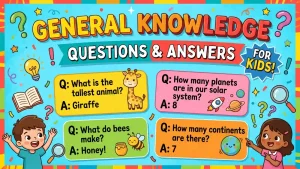
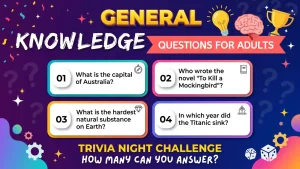
Fun bonus questions for tests are extra questions that add fun and a chance to earn extra marks. They sit outside the main test score and cover quick facts, riddles, or short challenges. This guide explains what they are, how teachers use them, and how to answer them well.
Definition and Meaning of Fun Bonus Questions for Tests
Fun bonus questions for tests are extra questions added to a test, quiz, or classroom activity. Students can answer them to earn extra points or enjoy a short challenge. These questions are often different from the main test questions.
A regular test may ask students to solve math problems or explain a science topic. A bonus question may ask them to name the largest planet, guess a famous movie, or solve a fun riddle.
For example:
Teacher: What is the largest planet in our solar system?
Student: Jupiter!
Teacher: Correct! You earned a bonus point.
This type of question can make a test feel less stressful. It gives students another way to show what they know.
What Makes a Bonus Question Fun?
A good bonus question has a few simple features:
- It is interesting: Students want to know the answer.
- It is clear: Students can understand what the question asks.
- It offers a challenge: It may test memory, logic, or creativity.
- It adds excitement: Students have a reason to keep trying.
- It is fair: Students should have a reasonable chance to answer it.
Bonus questions can cover almost any subject. A math teacher might add a brain teaser. A history teacher might ask about a famous leader. An English teacher might ask students to guess a word from its meaning.
Examples of Fun Bonus Questions
Here are some simple examples teachers can use:
- What is the largest ocean on Earth?
- How many sides does a hexagon have?
- Which animal is known as the king of the jungle?
- What is the name of the toy cowboy in Toy Story?
- What has hands but cannot clap?
- Which planet is known as the Red Planet?
- What is the capital city of Japan?
Answers: Pacific Ocean, six, lion, Woody, a clock, Mars, and Tokyo.
Fun bonus questions do more than add points. They can make students curious and help them enjoy learning.
Background and History of Bonus Questions
Bonus questions have a long connection with tests, games, and learning activities. People have used questions to test knowledge for many years. Teachers have also looked for ways to keep students interested in their lessons.
The exact history of bonus questions is hard to trace to one person or date. However, the idea is simple. Give learners an extra challenge and reward them for getting the answer right.
In traditional classrooms, teachers often asked extra questions to check how well students understood a lesson. Some teachers used these questions to reward strong answers. Others used them to review important facts before an exam.
Over time, classroom tests became more varied. Teachers began using games, team quizzes, puzzles, and other activities to help students learn. Bonus questions fit well into these methods because they combine learning with play.
Bonus Questions in Modern Classrooms
Today, teachers can add bonus questions to paper tests, online quizzes, and group activities. A question might appear at the end of a worksheet or during a classroom review game.
For example:
Teacher: We have one final bonus question. Which gas do plants take in from the air?
Student: Carbon dioxide!
Teacher: Great job! That is correct.
This small activity can help students remember facts while keeping the class engaged.
The Rise of Digital Quizzes
Digital learning tools have made quiz games easier to create and share. Teachers can now use online platforms to ask quick questions and show scores in real time.
Bonus questions are also common in trivia games, educational videos, and online challenges. A student can answer questions alone or compete with friends.
Social media has helped popularize short quizzes, too. People often share riddles, general knowledge questions, and challenges that invite others to comment with their answers.
Why Bonus Questions Remain Popular
The main reason is simple: people enjoy a challenge when it feels rewarding.
A bonus question can break up a long test. It can also give students a chance to use knowledge from outside the classroom.
The idea has stayed useful because it makes learning more active, social, and enjoyable.
Usage in Various Contexts
Fun bonus questions for tests can be used in many settings. They are not limited to school exams. Teachers, students, quiz hosts, and online creators can all use them.
1. In School Tests
Teachers can place one or two bonus questions at the end of a test. These questions may cover the lesson or include a general knowledge challenge.
Teacher: You have finished the main test. Would you like to try a bonus question?
Student: Yes! What is the smallest prime number?
Teacher: Correct. The answer is 2.
2. In Text Messages
Friends can share bonus questions through text messages. This is an easy way to test each other’s knowledge.
Ali: Quick bonus question! How many days are in a leap year?
Sara: 366!
Ali: Correct. You win bragging rights.
3. On Social Media
People can post bonus questions on platforms such as Instagram, Facebook, and X. These questions may invite followers to comment with their answers.
For example:
“Bonus question! Which country is home to the Great Pyramid of Giza? Comment with your answer!”
This format can encourage friendly discussion and help people learn new facts.
4. In Gaming Communities
Gaming groups often enjoy trivia challenges. A host can add bonus questions between rounds or use them as a tie-breaker.
Player 1: We are tied. What is the fastest land animal?
Player 2: The cheetah!
Player 1: You got it!
5. In Study Groups
Students can make their own bonus questions while preparing for an exam. Each student takes a turn asking a question.
This method helps everyone review the subject and spot facts they may have forgotten.
6. At Work
Teams can use short quiz questions during training or team-building events. Questions about company knowledge, safety rules, or general trivia can make these activities more engaging.
However, questions used in formal assessments should match the learning goals.
Bonus questions work best when they fit the audience and the purpose of the activity.
Common Misconceptions and Clarifications
People sometimes misunderstand what bonus questions are meant to do. A few simple rules can help teachers and students use them well.
Misconception 1: Bonus Questions Are Always Easy
Bonus questions can be easy, but they do not have to be. Some ask for simple facts, while others require logic or careful thinking.
For example:
- Easy: How many months are in a year?
- Medium: Which planet has the most prominent ring system?
- Tricky: What number comes next: 2, 4, 8, 16, __?
Answers: 12, Saturn, and 32.
The right level depends on the age and knowledge of the students.
Misconception 2: Bonus Questions Do Not Matter
Bonus questions can affect a test score if the teacher allows extra points. This can help students, but the rules should be clear.
Students should know how many points a question is worth and whether those points can change their final grade.
Misconception 3: Every Student Must Answer Them
Some bonus questions are optional. A student may choose to answer or skip them.
If the question is required, it should be treated as part of the main test rather than an optional bonus.
Misconception 4: Funny Questions Are Not Educational
Funny questions can still teach useful facts. A silly riddle may help students think carefully, while a humorous science question may help them remember a concept.
The important thing is to make sure the question has a clear purpose.
Misconception 5: Bonus Questions Are Always Fair
A question is not fair just because it is fun. Students may have different backgrounds, experiences, and levels of knowledge.
For example, a question about a local sport may be easy for some students but unfamiliar to others.
Teachers should choose questions that match the class and avoid relying on information that students could not reasonably know.
Can Bonus Questions Be Inappropriate?
Yes, if they include offensive jokes, personal details, or topics that make students uncomfortable. Teachers should avoid questions that target a student’s background, appearance, family, or personal life.
A good bonus question should create excitement, not embarrassment.
Similar Terms and Alternatives
Several terms are close in meaning to fun bonus questions for tests. Each one has a slightly different use.
1. Extra Credit Questions
Extra credit questions allow students to earn additional points beyond the main test score. They are often used in school assessments.
Example: “Answer this extra credit question for two additional points.”
2. Trivia Questions
Trivia questions test knowledge of facts about topics such as history, science, music, sports, and geography.
Example: “Which country invented paper?”
Answer: China.
3. Bonus Quiz Questions
These are extra questions added to a quiz. They may test the same topic as the quiz or introduce a fun challenge.
4. Brain Teasers
Brain teasers test logic and creative thinking. They may not have anything to do with a school subject.
Example: “What gets wetter as it dries?”
Answer: A towel.
5. Tie-Breaker Questions
Tie-breaker questions help decide a winner when two players or teams have the same score.
Example: “How many bones are in the typical adult human body?”
Answer: 206.
6. Challenge Questions
Challenge questions are designed to make students think harder. They may require several steps or a deeper understanding of a topic.
Comparison Table
| Term | Main Purpose | Example |
| Bonus question | Earn extra points or add fun | Name the largest ocean |
| Extra credit question | Improve a test score | Solve an extra math problem |
| Trivia question | Test general knowledge | Name the capital of Italy |
| Brain teaser | Test logic | Solve a number pattern |
| Tie-breaker question | Decide a tied result | Answer a final challenge |
| Challenge question | Test deeper understanding | Explain why seasons change |
Choose the term that best matches your activity. For a school test, “bonus question” or “extra credit question” is often the clearest choice.
How to Respond to Fun Bonus Questions
The best way to answer a bonus question depends on the situation. You may be in a classroom, a group chat, an online quiz, or a friendly competition.
1. Give a Direct Answer
If you know the answer, keep it simple.
Teacher: What is the capital of France?
Student: Paris!
A clear answer is often all you need.
2. Make a Funny Reply
If the activity is casual, a little humor can make it more enjoyable.
Friend: Bonus question! What has four legs but cannot walk?
You: A table. Unless it has a very busy day!
This kind of reply works best when everyone understands the joke.
3. Show Curiosity
You do not have to know every answer. A bonus question can help you learn something new.
Friend: Which planet is closest to the Sun?
You: I think it is Venus, but I am not sure.
Friend: It is Mercury!
You: Nice! I learned something new.
Admitting that you are unsure is better than pretending to know.
4. Ask for a Hint
If the question is difficult, ask for a clue.
Teacher: What has keys but cannot open a lock?
Student: Can I have a hint?
Teacher: You can play it.
Student: A piano!
5. Respond Professionally
During a work quiz or training session, use polite and clear language.
Examples include:
- “My answer is option B.”
- “I believe the answer is carbon dioxide.”
- “Could you repeat the question, please?”
- “I am not certain, but my best guess is 12.”
6. Protect Your Privacy
Some online quizzes ask personal questions. You do not need to share private information to take part in a fun activity.
You can say:
“I would rather skip that question. Can we try a general knowledge one?”
A good response is clear, respectful, and suited to the setting.
Regional or Cultural Differences
Fun bonus questions are used in many parts of the world, but the topics and styles may vary by culture, language, and age group.
In some classrooms, teachers may focus on school subjects. In other settings, they may prefer sports, movies, local history, or traditional riddles.
Questions About Local Knowledge
A question about a country’s national animal may be easy for local students but hard for people elsewhere.
For example:
- A question about the national poet may suit a class in Pakistan.
- A question about a famous landmark may suit students studying world geography.
- A question about a popular local sport may work well for a community quiz.
Teachers should consider what students have learned and what they are likely to know.
Language Differences
A joke or riddle may work in one language but lose its meaning when translated. Some riddles depend on words that sound alike or have more than one meaning.
For example, an English riddle about a “pair” and a “pear” may confuse learners who do not know that the words sound alike.
Using simple words can make questions easier for people from different language backgrounds.
Age and Cultural Awareness
Young children may enjoy animal facts, colors, and simple riddles. Older students may prefer science, history, world affairs, and challenging logic questions.
Questions should also avoid unfair assumptions about religion, culture, money, or family life.
International Online Quizzes
Online quizzes often bring together people from different countries. Questions about widely known facts, such as the solar system or basic mathematics, can work well for mixed groups.
However, questions about regional slang, local television shows, or national events may need extra context.
The best approach is to make bonus questions clear, inclusive, and suitable for the people answering them.
Comparison with Similar Terms
Bonus questions, extra credit questions, and trivia challenges may look alike, but they serve different purposes.
| Feature | Bonus Questions | Extra Credit | Trivia Challenges |
| Main goal | Add fun or extra points | Improve a score | Test general knowledge |
| Subject | Any suitable topic | Often linked to a course | Often covers many topics |
| Difficulty | Easy to hard | Depends on the test | Easy to very hard |
| Common setting | Tests and quizzes | School assessments | Games and competitions |
| Scoring | May be optional | Usually adds points | May use a separate score |
| Example | Name a famous scientist | Solve an extra equation | Guess a world capital |
Which Type Should You Choose?
Choose bonus questions when you want to make a test more enjoyable.
Choose extra credit questions when the main goal is to give students a chance to earn additional marks.
Choose trivia challenges when you want to test general knowledge or run a quiz game.
Choose brain teasers when you want students to use logic and think in new ways.
Teachers can also mix these types. For example, a science test might include an extra credit question about the lesson and a fun riddle at the end.
The key is to tell students what each question is for. This helps them understand the rules and enjoy the activity without confusion.
Usage in Online Communities and Dating Apps

Fun bonus questions are common in online quiz groups, gaming communities, and social media posts. They can help people start conversations and share knowledge.
Online Quiz Communities
People often post trivia questions in groups about history, science, books, films, and general knowledge.
For example:
“Bonus question for everyone: Which is the largest continent on Earth?”
People can share their answers in the comments. The correct answer is Asia.
Gaming Communities
Online gaming groups may use trivia questions during breaks or friendly competitions.
Player 1: One bonus question before the next round. How many players are on the field for one soccer team during normal play?
Player 2: Eleven!
Player 1: Correct!
Questions like these can bring players together, even when they enjoy different games.
Social Media Posts
Creators can use bonus questions to invite comments and make educational content more engaging.
A simple post might say:
“Quick bonus question! What is the chemical symbol for gold? Write your answer below.”
The answer is Au.
Dating Apps and Conversation Starters
On dating apps, fun questions can help people start a light conversation. However, these questions are usually conversation starters rather than formal test questions.
For example:
Person A: Bonus question: Would you rather explore space or the deep ocean?
Person B: The deep ocean. What about you?
Person A: Space, because I want to see another planet!
This can lead to a friendly conversation without putting pressure on either person.
Tips for Online Use
- Keep questions short and easy to understand.
- Avoid sharing private details.
- Do not make fun of people for getting an answer wrong.
- Check facts before posting answers.
- Use suitable questions for the platform and audience.
Online bonus questions work best when they encourage friendly discussion rather than arguments or embarrassment.
Hidden or Offensive Meanings
The phrase “fun bonus questions for tests” has no widely recognized hidden or offensive meaning. It usually refers to extra questions that make a test or quiz more enjoyable.
Still, the questions themselves can cause problems if they are poorly written or used in the wrong setting.
When a Question Can Cause Discomfort
A question may feel inappropriate if it asks students to reveal personal details, makes fun of a group, or touches on a sensitive topic without a clear reason.
For example, a teacher should not use a student’s family situation as the subject of a joke.
Likewise, a question that makes unfair claims about a culture or country can create confusion or hurt feelings.
Humor Depends on Context
A funny question among close friends may not be suitable for a classroom or workplace. People have different ideas about what is funny.
For example:
Friend: Bonus question! What is your most embarrassing moment?
You: I will skip that one. Ask me a science question instead!
This is a polite way to avoid sharing something personal.
Avoid Trick Questions That Feel Unfair
Some trick questions are harmless and fun. Others rely on confusing wording that makes students feel they have been tricked.
A good trick question should still have a clear answer.
For example:
“What has a neck but no head?”
Answer: A bottle.
This is a simple riddle that tests creative thinking without targeting anyone.
Keep the Activity Respectful
Teachers and quiz hosts should check questions before using them. They should also explain any unusual wording and accept reasonable answers when a question is unclear.
The phrase itself is harmless, but the content, tone, and setting of a question matter.
Suitability for Professional Communication
Fun bonus questions can work in professional settings, but the questions should match the purpose of the activity.
At work, they may be used during staff training, team-building sessions, meetings, or learning events. A short quiz can help people review important facts and interact with their colleagues.
When Bonus Questions Are Appropriate
Bonus questions can be useful during:
- Staff training sessions
- Educational workshops
- Team-building events
- Workplace safety quizzes
- Product knowledge tests
- Informal team meetings
For example:
Trainer: Here is a bonus question. Which number should you call for an emergency in this country?
The correct answer depends on the country, so the trainer should make the location clear.
Questions related to work should use accurate information and avoid confusion.
When to Avoid Them
Bonus questions may not be suitable when a meeting covers a serious issue, a formal assessment has strict rules, or employees are under pressure to complete urgent work.
They should also not be used to embarrass people or test knowledge that has never been taught when the results affect important decisions.
Professional Alternatives
If you want a more formal tone, consider these phrases:
- Additional question: A neutral term for another question.
- Optional challenge question: A question that people may choose to answer.
- Extra credit question: A question that offers additional marks.
- Knowledge check: A short question used to review learning.
- Knowledge challenge: An activity designed to test understanding.
Example:
“At the end of the training session, we will include an optional challenge question to review the key points.”
This sounds clear and professional.
Bonus questions are suitable for work when they support learning, follow clear rules, and respect everyone taking part.
Frequently Asked Questions
They are extra questions added to a test or quiz to make learning more enjoyable. They may offer extra points or provide a fun challenge.
Try these easy examples: How many days are in a week? What colour do you get when you mix red and yellow paint? Which planet do we live on? How many legs does a spider have? Answers: Seven, orange, Earth, and eight.
Yes. If a teacher awards extra points, correct answers may improve a student’s score. The effect depends on the scoring rules.
They can be either. A mix of easy, medium, and hard questions often works well for a varied group.
No. Teachers decide whether they are optional. They should explain the rules before students begin the test.
Conclusion
Fun bonus questions for tests are a simple way to make learning more exciting. They give students a chance to earn extra points, test their knowledge, and enjoy a small challenge. Teachers can use them in school exams, classroom games, and study sessions. Friends can share them through text messages, while online communities can use them to start friendly discussions.
The best bonus questions are clear, fair, and suitable for the people answering them. They can cover general knowledge, science, history, sports, movies, or simple riddles. Some questions are easy, while others ask students to think more deeply.
It is also important to set clear rules. Students should know whether bonus questions are optional and how many points they can earn.
A good bonus question should make people think, learn, and have fun. With the right questions, even a simple test can become a more enjoyable learning experience.
Keep testing your knowledge with more quizzes on this site: general knowledge quiz, trivia questions for kids, family trivia questions, and general knowledge for students.

Thomas Mitchell is a writer at New Learn Knowledge, sharing clear and useful educational content.
He enjoys creating simple guides and informative articles that help readers learn and discover new knowledge.